Coordination
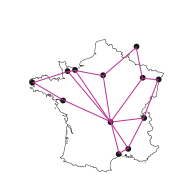
Partners
Objectives
Nowadays, food industry companies must adapt their innovation strategies to meet fast-changing societal expectations. Growing demand for so-called “clean label” food translates increased expectations for natural products, transparency, and quality. In this context, bio-preservation appears to be a promising solution. This approach rests on the use of living microorganisms or their metabolites (protective cultures) to manage the development of pathogenic and spoilage flora, while preserving the food’s intrinsic characteristics.
Faced with these challenges, RMT Actia Florepro aims to generate and disseminate new knowledge useful for the development of bio-preservation, taking into account consumer expectations, companies’ needs and constraints, scientific developments, and legislative and regulatory aspects.
This RMT began its work in 2026 and is set to run for five years.
Actions
Workstream 1: Levers for innovation and the development of bio-preservation: Structuring exploratory and multidisciplinary actions to identify and characterise model consortia of target and protective strains, evaluating their robustness in different conditions, and measuring their capacity for implementation as well as their protective efficacy.
Workstream 2: Flows and microbial indicators upstream and downstream along the value chain: Analysing microbiological dynamics across production chains through longitudinal studies, in order to identify relevant indicators for food quality and safety.
Workstream 3: From genes to processes: Developing innovative methodological approaches and studying the mechanisms related to bio-preservation with an assessment of the state of the art in terms of tools and the development of R&D projects aiming to connect fundamental knowledge to industrial applications.
Workstream 4: Communication, promotion, and transfer: Organising the dissemination of results through the implementation of a technology transfer strategy that promotes training and the adoption of the final solutions by professionals and the public authorities.