Coordination
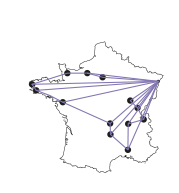
Partners
Objectives
Climate change and changing consumer practices will have repercussions on food safety and hygiene with an amplification of the risk of food-borne diseases. Food waste has an economic impact while contributing to climate change and the deterioration of ecosystems.
In this context, RMT Actia Qualima intends to reaffirm its commitment to the microbiological safety of food by adopting a systemic, integrated, “One Health” approach from field to fork. It has a dual ambition: to anticipate the emergence of new microbiological hazards in a considered way, and to help the food industry transition towards safer, more sustainable and more resilient food systems. In close collaboration with stakeholders on the ground, institutions, technical centres, and research laboratories, RMT Actia Qualima aims to develop, recommend and optimise decision-aid and expert-assessment tools suited to managing the microbiological quality of food.
This RMT began its work in 2026 and is set to run for five years.
Actions
Workstream 1: How changes to the climate and society affect the evolution of microbiological hazards in the food chain: Analysing the influence of the climate and changing behaviours on the evolution of microbiological hazards along the entire food chain.
Workstream 2: The microbiological impact of safe and sustainable resource management: Evaluating the effects of sustainable practices (water, energy, packaging) on the microbiological safety of food.
Workstream 3: The aggregation of data and multi-criteria analysis of microbiological risk: Developing quantitative, multi-criteria methodologies for characterising and optimising the management of microbiological risk.
Workstream 4: Scientific expertise and support for the public authorities: Providing technical expertise to inform decisions on regulations and food safety.
Workstream 5: Dissemination, training: Disseminating knowledge and training professionals, future professionals, and regional food safety inspectors in collaboration with institutions of vocational training and higher education connected to the food industry.